Vibration and impact
Cushioning parts help reduce movement, contact noise and impact around vehicle components.
Solutions / Automotive Sealing & Cushioning
BISCOTECH supplies silicone foam, EPDM rubber, CR foam and PU foam for vehicle seals, battery assemblies, electronics, vibration control and interior or exterior interfaces.
Discuss Your ProjectQuotes in as little as 30 minutes. Same-day drawings and samples.
Application challenge
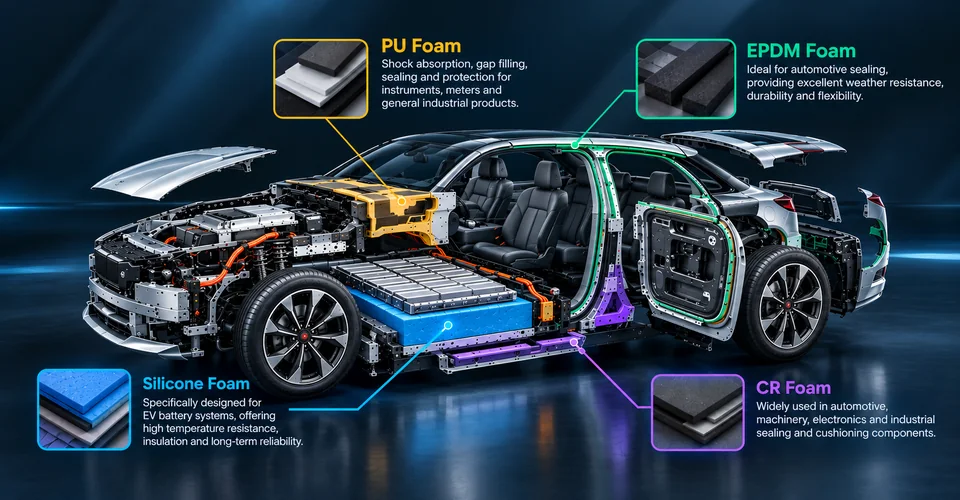 Automotive material protection
Automotive parts experience vibration, temperature changes, moisture, oil, compression and long service intervals. Sealing and cushioning materials must protect interfaces while fitting tight spaces and supporting efficient assembly.
BISCOTECH helps automotive teams select foam and rubber materials, then converts them into gaskets, pads, strips and custom parts for conventional and new energy vehicle systems.
Key pain points
Cushioning parts help reduce movement, contact noise and impact around vehicle components.
Materials need suitable recovery and stability across engine, battery, cabin and outdoor environments.
Exterior and underbody interfaces need resilient seals that tolerate moisture, ozone and aging.
Die-cut shapes, adhesive backing and repeatable formats support efficient vehicle assembly.
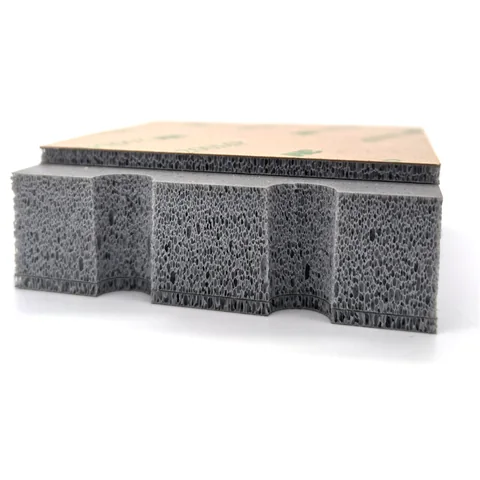 Silicone Foam
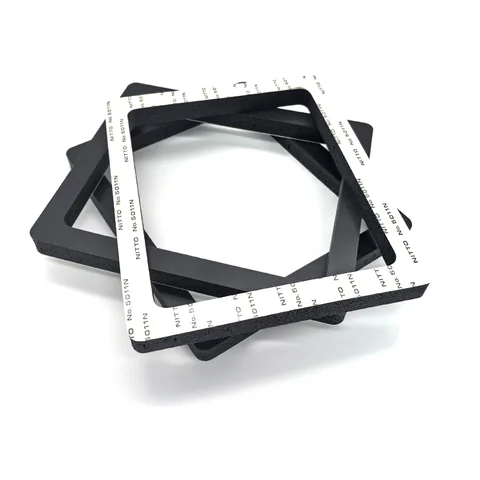 EPDM Rubber
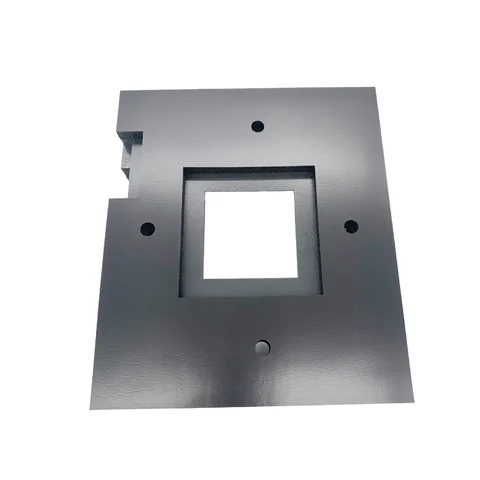 CR Foam
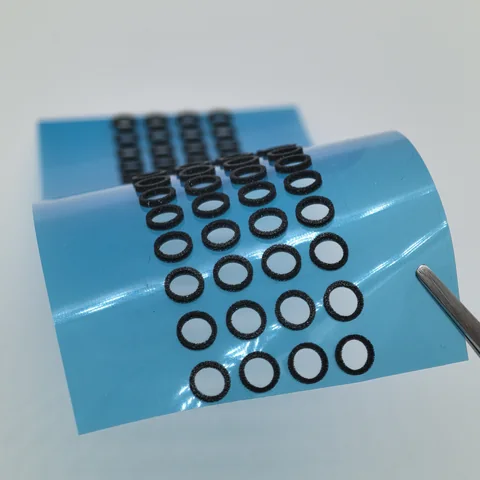 PU Foam
Material options
For temperature stability, compression recovery, flame-retardant cushioning and demanding automotive seals.
For weather, ozone and water resistance in vehicle door, window, body and outdoor seals.
For mechanical strength, oil resistance, weather resistance and cushioning around vehicle assemblies.
For soft cushioning, gap filling, anti-rattle pads and interior component protection.
Typical applications
Converting and customization
BISCOTECH can adjust thickness, density, hardness, adhesive, liner, roll width and die-cut geometry to match the vehicle component and production process.
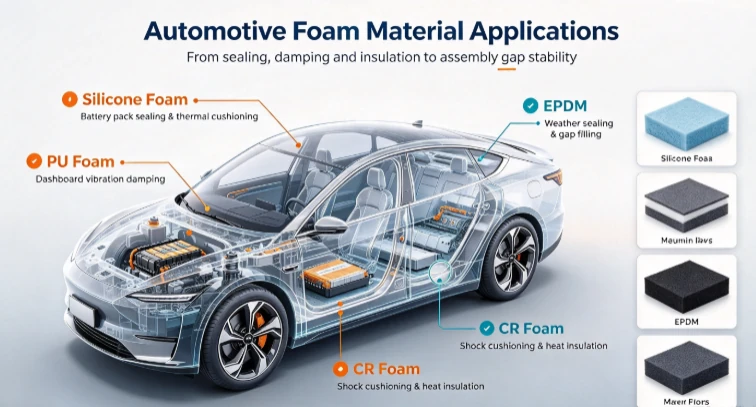
Application example
A vehicle assembly may need a resilient pad that could reduce vibration, fit a tight gap and remain stable through temperature changes.
Review the drawing, compression range, operating temperature, contact surfaces and assembly method, then compare PU foam, silicone foam and rubber options.
Prepare candidate samples to evaluate fit, compression recovery and adhesive compatibility. Check performance under the intended operating conditions before confirming the material and production format.
FAQ
The right choice depends on temperature, compression, oil or weather exposure and the required mechanical performance. PU foam is useful for soft cushioning, while silicone foam, EPDM and CR foam support more demanding conditions.
Yes. We can support cushioning, sealing and insulation parts for battery systems, vehicle electronics, body interfaces, trim and general automotive assemblies.
A drawing or sample, target thickness, compression range, operating temperature, exposure conditions, adhesive requirement, estimated quantity and assembly method are helpful for material selection.
Automotive projects